
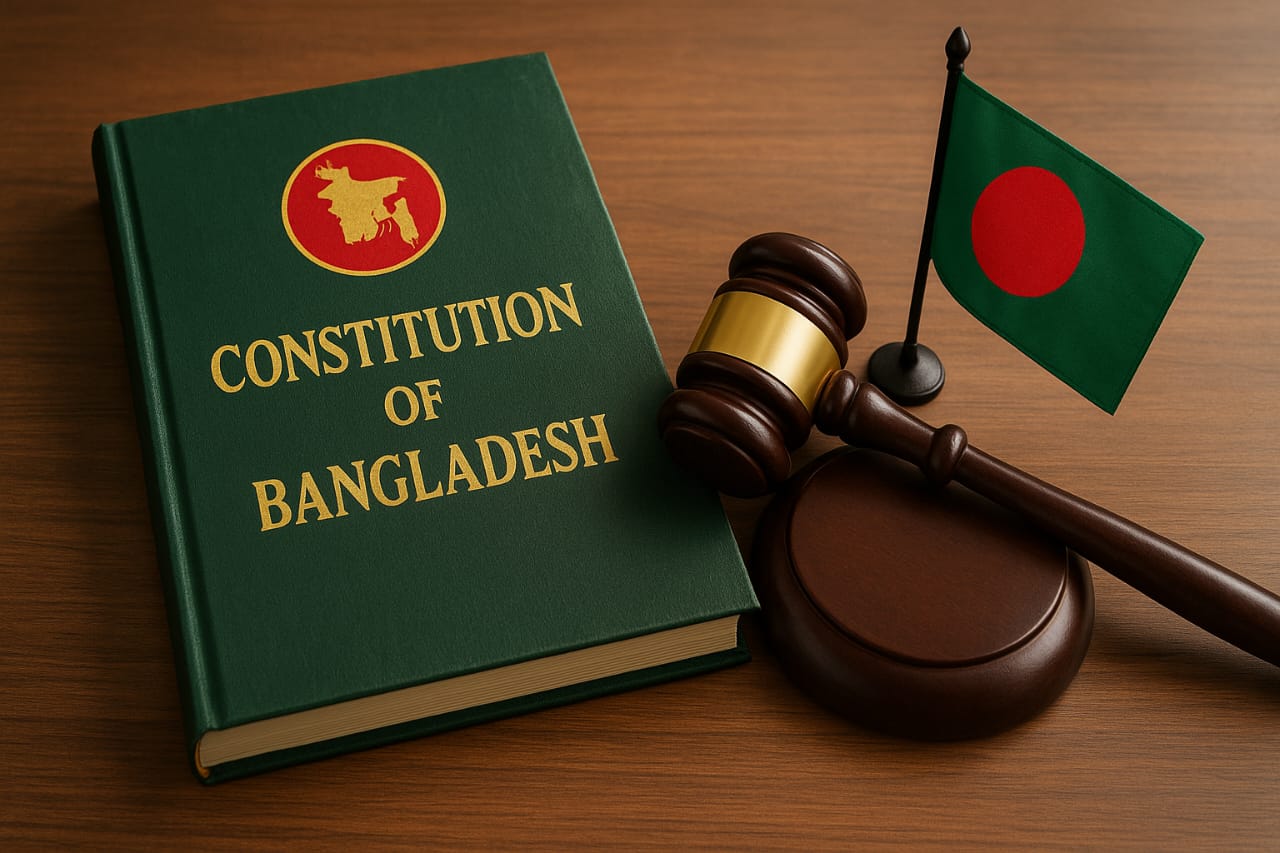
Mohammad Basir-Ul-Haq Sinha : Bangladesh’s constitution, largely modelled on the Westminster system and the Indian constitutional framework, sits in profound discord with the nation’s own political and social reality. If the country is to move forward, this foundational document requires not mere amendment, but fundamental transformation.

A genuine democracy is established only when a charter emerges from an organic analysis of a people’s collective thought—an analysis rooted in its political traditions, cultural orientation, economic conditions, and geographical realities. Bangladesh’s current constitution, a derivative document, fails this essential test.
This foundational flaw has given rise to a trio of profound structural limitations that continue to cripple the nation’s politics.
First, the state lacks an institutional mechanism to render authoritarianism sterile. The constitution provides no effective bulwark against the concentration of power, leaving the democratic process vulnerable to autocratic capture.

Second, the legal framework is devoid of the robust republican safeguards necessary for a thriving, constitutional democracy. The existing arrangements are insufficient to guarantee the freedoms and processes that define a pluralistic, rule-based polity.

বিজ্ঞাপন
Finally, and perhaps most consequentially for its citizens, the state has failed to develop a long-term, development-oriented framework grounded in political consensus. There is no evidence of an analytical, cross-party approach to crafting a century-long national plan—a roadmap rooted in the country’s actual needs rather than the myopia of short-term electoral calculations. Until this is addressed, the nation’s potential will remain hostage to its politics.