
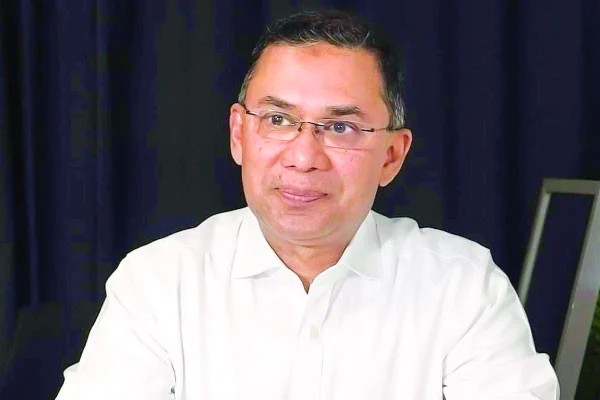
Staff Reporter : A revolution or a mass uprising is not a sudden flash of light like a comet. Rather, it is the eruption of long-accumulated lava from a dormant volcano. A revolution or uprising in any country is not a mere matchstick but a blazing torch. Behind a successful revolution lies a long history of struggle, oppression, and untold chapters of sacrifice. If we forget that history, the aspirations of the revolution cannot be realized. The core aspiration of the July Revolution was to establish the rights of the people, and this fight has a long history.

Just as the Liberation War of 1971 was not merely a nine-month bloody war but the epic of a step-by-step awakening of the people from 1947—evolving through the Language Movement of 1952, the Education Movement of 1962, the Mass Uprising of 1969, and the elections of 1970 to culminate in independence—the July Revolution is similarly not just a 36-day movement for quota reform. It is the ultimate victory of the people’s movement against 17 long years of discrimination,
corruption, looting, disenfranchisement, and human rights violations. The fall of the Awami League on 5 August 2024 is the collective manifestation of these smaller movements. The initiation of this movement was laid by Begum Zia, and the hero of the final victory is Tarique Rahman. The explosion of public anger on 5 August 2024 was the result of the public opinion built by the BNP through 17 years of movement and struggle.

This was made possible due to the efficient leadership and prudent decisions of Tarique Rahman. The BNP was the core strength of the July movement, and Tarique Rahman is the primary architect of this revolution.

To understand the significance of the July movement, we must deeply observe the political events of Bangladesh since 2001. In the October 2001 election, the BNP achieved a landslide victory, marking the beginning of a new era. Bangladesh began its journey toward breaking the shackles of dependency and moving forward. The BNP initiated a new age based on the principles of a self-reliant economy, an independent foreign policy, and putting the country’s interests above all. However, those opposing Bangladesh’s
prominence in the world couldn’t accept this massive victory of the BNP. Conspiracy began immediately after the BNP came to power in 2001. False propaganda was systematically carried out against the BNP. A section of civil society, their patronizing media, and foreign powers joined forces in a conspiracy against the BNP. The fruit of this conspiracy was the 1/11 regime led by Fakhruddin and Moeen Uddin Ahmed.
The primary objective of the coup by civil society and a section of military officers in 2007 was to destroy the BNP. During this time, Begum Khaleda Zia, her eldest son Tarique Rahman, and her younger son, the late Arafat Rahman Koko, were arrested without any reason. Inhuman torture was inflicted upon them. In particular, the barbaric torture inflicted upon the current prime minister, Tarique Rahman, is unprecedented in history. It was here that the seeds of the 2024 mass uprising were sown.
Through the staged election of 2008, a new arrangement to destroy the BNP under the guise of democracy began. However, the uncompromising leader Begum Khaleda Zia sat in parliament for the sake of democracy and the country. She started a new fight for national liberation alongside the people. The ultimate victory of this fight was achieved on 5 August 2024.
Upon coming to power, the Awami League began the process of snatching away the people’s voting rights. They abolished the provision for a non-partisan, neutral caretaker government.
The sole objective was to ensure that the BNP, blessed with the people’s love, could never return to power. Through the voterless election of 2014, the Awami League and its cronies sought to bury democracy. Begum Zia then forged an unprecedented national unity through an extraordinary peaceful movement. The explosion of this unity took place in 2024.
Following this event, brutal oppression descended upon Begum Zia. She was sentenced in false cases. Through a mockery of justice, she was imprisoned for years. This cruelty toward Begum Zia awakened the conscience of the people across the entire country.
During this critical juncture of the nation, the current prime minister, Tarique Rahman, took the helm of the party. He became the beacon of light for the nation in the darkness. On one hand, he reorganized the BNP, and on the other, he called for national unity. The midnight election of 2018 was the final nail in the coffin of democracy in Bangladesh.
Through this election, the Awami League completely transformed into an isolated and anti-people force. Essentially, through the 2018 election, Bangladesh embarked on the highway of the movement to restore democracy. By participating in this election, Tarique Rahman unmasked the Awami League before the nation. This is an unparalleled example of his visionary political strategy. It was through this that the international community was finally awakened.
The entire world witnessed the cruel mockery taking place in Bangladesh in the name of democracy. During this period, Tarique Rahman established a diplomatic network worldwide, which played a crucial role in the July movement.
Subsequently, Tarique Rahman announced a one-point movement and called for a boycott of all elections. As a result, the Awami League’s mockery in the name of elections became visible both nationally and internationally. This was the final step toward the fall of the Awami League. In this way, BNP Chairman Tarique Rahman prepared the backdrop for the July movement.
During the 17 years of movement, more than 142,825 cases were filed against BNP leaders and activists, with the number of accused exceeding 5,032,655. This is just a number, but its scale is so vast that it cannot be fully described in writing. Thousands of BNP leaders and activists have been ruined, socially humiliated, and physically crippled due to torture. No other single political party has made more sacrifices or struggled longer than the BNP. Despite such severe oppression and suppression, the BNP did not lose its way due to the singular and firm leadership of its chairman,
Tarique Rahman. The July Revolution took place in continuation of the BNP’s one-point movement, led by BNP Chairman Tarique Rahman. The final victory came when the anti-discrimination movement joined forces with the BNP’s 17-year struggle. In the 2024 mass uprising, 422 members of the BNP were martyred.
Prior to this, up until 2023 during the Awami League regime, 1,551 BNP members were martyred, and 423 were victims of enforced disappearance. The total number of enforced disappearances during this period, including all political parties and ordinary citizens, stands at around 700. The student-people movement was not merely a protest for student demands; rather,
it transformed into a struggle for political liberation along the path shown by the BNP. Following the political directives of Tarique Rahman, BNP leaders and activists actively participated in this movement, risking their lives on the streets and providing maximum support to the students and general public. As a result, the path to restoring democracy and political liberation in Bangladesh was paved.
The rights of the people that were snatched away through the 1/11 regime in 2007 were restored through the fall of the autocracy in 2024, following a 17-year struggle led by the BNP—a glorious struggle spearheaded by the current prime minister, Tarique Rahman.