
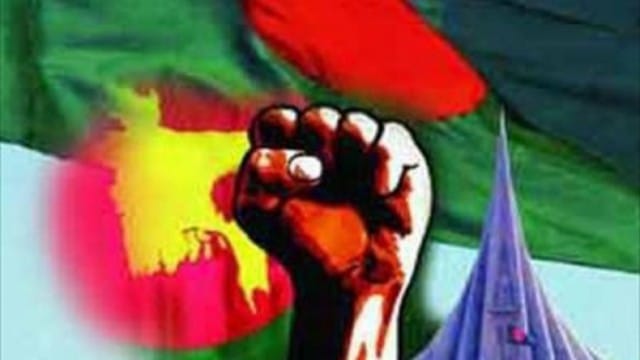
Staff Reporter : The struggle over Bangladesh’s Liberation War is no longer confined to history books. It is playing out in parliament, political rallies, television interviews, and social media. For a generation born long after 1971, the battle is no longer for independence but for historical truth. That is why Prime Minister Tarique Rahman’s recent commitment in parliament to prepare an accurate and comprehensive list of the martyrs and freedom fighters is far more than an administrative exercise. It is about preserving the nation’s collective memory.
Replying to a question in parliament, the prime minister acknowledged that the process of identifying genuine martyrs and freedom fighters had been politicised after independence. He reiterated the government’s pledge to prepare a verified list of those who sacrificed their lives and those who fought for Bangladesh’s freedom. Every nation owes its heroes an accurate record. When history becomes politicised, truth becomes its first casualty.
The timing of this initiative is significant. Over the past two years, Jamaat-e-Islami leaders have repeatedly attempted to redefine the party’s role during the Liberation War. In a television interview in November 2024, Jamaat Ameer Dr Shafiqur Rahman claimed that Jamaat was not opposed to Bangladesh’s independence but was concerned about the circumstances under which it was achieved. He went further,
suggesting that Jamaat’s position was similar to that of Bangabandhu Sheikh Mujibur Rahman for a united Pakistan! More recently, he highlighted that he comes from a freedom fighter’s family, while Chandpur district Jamaat Ameer Billal Hossain Miaji declared, “Do not look at us with suspicion. I too was a supporting freedom fighter.”

Individuals should not be judged solely by their family backgrounds or personal identities. Political parties, however, must be judged by their institutional history. It is here that Jamaat’s critics argue the party has yet to fully reckon with its role in 1971.
The historical record remains clear. Jamaat-e-Islami, as a political organisation, opposed Bangladesh’s struggle for independence and supported the preservation of a united Pakistan. Numerous leaders and activists collaborated with the Pakistani military through organisations including the Peace Committee, Razakar, Al-Badr, and Al-Shams. These auxiliary forces became associated with some of the worst atrocities committed during the Liberation War, including the targeted killing of intellectuals, mass violence against civilians, rapes and persecution of minorities.
The International Crimes Tribunal subsequently convicted several senior Jamaat leaders, including former ameer Motiur Rahman Nizami and secretary general Ali Ahsan Mohammad Mujahid, for crimes against humanity and genocide committed during the Liberation War. These convictions addressed individual criminal responsibility, but they also reinforced the established historical record regarding the role played by sections of the party’s leadership during 1971.
Parliament recently reaffirmed that historical understanding by passing the Jatiya Muktijoddha Council (Amendment) Act, 2026, which continues to identify the then Jamaat-e-Islami, Muslim League, Nezam-e-Islam, Razakar, Al-Badr, Al-Shams, and the Peace Committee as collaborators of the Pakistani occupation forces. Jamaat opposed the provision, while BNP leaders including Mirza Fakrul Islam Alamgir and Salahuddin Ahmed have separately accused the Jamaat of attempting to portray itself as pro-Liberation despite its historical opposition to Bangladesh’s independence.
Political parties can evolve. Democracies should allow ideological transformation and peaceful political participation. But genuine reconciliation begins with honesty. No democratic society strengthens itself by rewriting painful chapters of its past. Historical accountability is not about perpetual punishment; it is about acknowledging documented facts.
This matters especially for young Bangladeshis. Most of today’s voters did not witness the horrors of 1971. They should evaluate political parties based on their policies, competence and vision for the future. Yet informed democratic choice also requires understanding how parties deal with their own history. A political organisation that struggles to acknowledge well-documented historical facts inevitably invites questions about its commitment to transparency and accountability.
An accurate list of martyrs and freedom fighters will therefore achieve more than administrative accuracy. It will help protect Bangladesh’s history from distortion and ensure that future generations inherit facts rather than competing political narratives.
The generation that fought for independence is gradually passing the torch. Preserving the truth of 1971 now rests increasingly with those who never experienced it. Bangladeshis can believe in forgiveness, democratic competition and political renewal. But those values cannot come at the expense of historical truth. Until Jamaat-e-Islami unequivocally acknowledges its organisational opposition to Bangladesh’s Liberation War and confronts that history without equivocation, many Bangladeshis will continue to question whether the party has earned their trust.